
Benefice Churches
One Family, Four Churches
Introduction
Before we tell you what we do, we would love you to know who we are.
Our four churches follow that same pattern...
St Peter's in Chelmarsh has stood on its site since a Norman church was founded there in 1144, one of the oldest continuous places of worship in this part of Shropshire. St Mary's in Highley, a twelfth-century sandstone building restored for each new generation, has grown into the largest of our four congregations. St Mary's in Billingsley, rebuilt in 1875, remains the only public building left in its village, a reminder of how much a small rural church can carry for a community. And St Bartholomew's has served Glazeley and Deuxhill together since the two parishes were formally joined in 1759, a partnership that has now lasted well over two centuries. Four buildings, four histories, four communities each with its own character and its own rhythm of worship. But like those first believers meeting in different houses across Jerusalem, we are not four churches so much as one church meeting in four places. What binds us together isn't our architecture or our postcodes. It's the same conviction that held that first scattered, gathered community together: knowing Jesus, and making him known. The profiles below tell each church's own story. Read them as four verses of the same song.
St Mary's, Highley
Serves: the village and parish of Highley
History: St Mary’s is a Grade II* listed 12th-century Norman church built from local sandstone. The building has undergone significant restoration and combines its historic character with facilities for contemporary worship. It has six bells, two of which are medieval, and the church is also valued as a place for quiet prayer.
What makes Highley distinctive: Highley is our largest church community and reflects a broad range of ages and worship traditions. Prayer has historically been at the heart of its life, alongside biblical teaching, children’s and youth ministry, pastoral care and active engagement with the wider village.
Services: St Mary’s is the principal worshipping centre within the Benefice, offering a breadth of worship from traditional Holy Communion to more informal and family-focused worship. Sunday 10:30am.
St Mary's, Billingsley
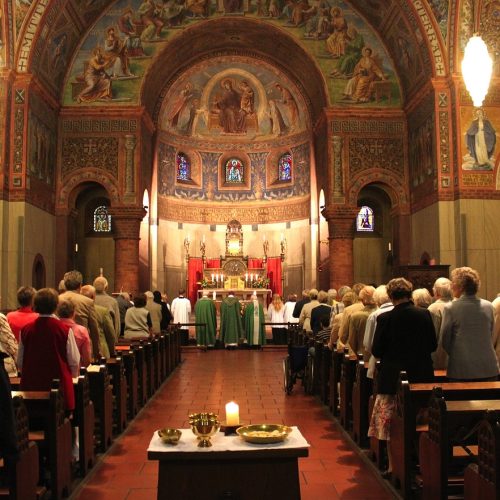
Serves: the rural parish and community of Billingsley
History: St Mary’s was established around 1140 and largely rebuilt in 1875. It is Grade II* listed, with two ancient yew trees among the notable features of its churchyard. In a very small rural community, the church is particularly significant as the village’s only public building.
What makes Billingsley distinctive: Billingsley is a small but outward-looking rural church with a strong connection to its wider community. Its worship ranges from traditional services to more creative expressions, and it has developed community activities, outdoor worship and opportunities for people who may not normally attend church.
Services: Holy Communion is held on the fourth Sunday at 8am, with an evening service on the second Sunday at 6pm from April to September.
St Bartholomew's, Glazeley with Deuxhill
Serves: the communities of Glazeley and Deuxhill, and welcomes people from the surrounding area
History: St Bartholomew’s was built in 1875, designed by the noted Victorian architect Arthur William Blomfield, and is Grade II listed. Although the present building is Victorian, there has been a place of Christian worship on this site for more than 1,000 years, with a reference going back to the Domesday Book. St Bartholomew’s has been the parish church for both Glazeley and Deuxhill since the two parishes were permanently joined in 1759; the earlier Deuxhill church was taken down in 1886 once its congregation had moved to worship here.
What makes Glazeley with Deuxhill distinctive: Glazeley is a small, resilient and welcoming rural worshipping community whose reach extends well beyond its parish boundaries. It has a strong tradition of involving the wider community through worship, breakfasts, social events and creative outreach. The church and churchyard are also valued as sacred spaces for prayer and reflection.
Services: Holy Communion on the third Sunday of each month at 10am.
Church Calendar
St Peter's, Chelmarsh
History: St Peter’s is a Grade I listed medieval church standing on the site of an earlier Norman church, traces of which survive in a Norman doorway. The present building dates largely from the 14th century, completed by around 1345 when a chantry chapel was endowed by Hugh de Mortimer, and it retains important historic features, including its medieval chancel, nave and roof, Norman font, historic east window, and carved rood screen and choir stalls.
What makes Chelmarsh distinctive: Chelmarsh is particularly known for its warm welcome, traditional worship, pastoral care and strong relationship with village life. The congregation values knowing people personally and helping newcomers feel included, while supporting people through celebrations, bereavement and other important moments of life.
Services: Weekly service at 9:30am, with Holy Communion and Morning Prayer forming part of the regular pattern.